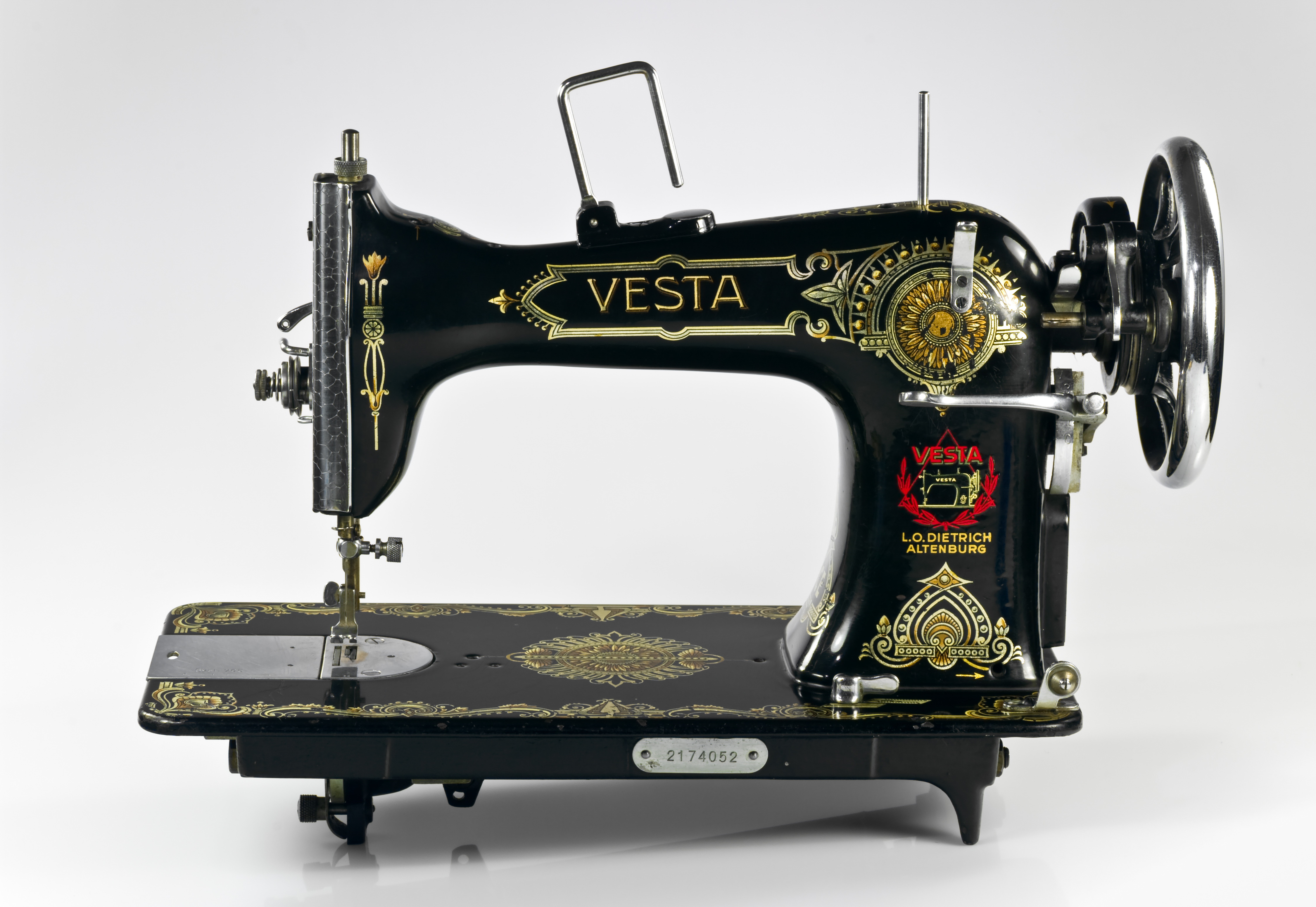
A basic domestic sewing machine handles almost every household repair faster than hand sewing, but only once it is threaded correctly and the tension is balanced. Most frustration with a new or borrowed machine traces back to one of those two things rather than a fault in the machine itself. This guide sets up the machine in order and then gives a short checklist for when stitches misbehave.
Know the parts you will touch
Models vary, but the controls involved in everyday sewing are consistent across straight-stitch machines.
| Part | What it does |
|---|---|
| Spool pin & thread guides | Hold and route the upper thread to the needle. |
| Tension dial | Sets how tightly the upper thread is held as it feeds. |
| Bobbin & bobbin case | Supply the lower thread that interlocks with the upper. |
| Stitch selector | Chooses straight, zigzag, or utility stitches. |
| Presser foot & feed dogs | Hold the fabric down and move it past the needle. |
Thread it in the right order
Always thread with the presser foot raised. Lifting the foot releases the tension discs so the thread can seat between them — threading with the foot down is the most common cause of a stubbornly tight upper thread.
- Wind a bobbin and seat it in its case following the arrows; the thread should pull with light, even resistance.
- Place the spool on the pin and lead the thread through each guide in sequence, down and around the tension area, and up to the take-up lever.
- Bring the thread down to the needle and thread it front to back, as marked on most machines.
- Hold the upper thread and turn the handwheel toward you once to catch the bobbin thread, then draw both threads back under the foot.
Test on a scrap first
Before sewing the real garment, run a line of stitches on a doubled scrap of the same fabric. This reveals tension and stitch-length problems while they cost nothing to fix.
Balancing tension
Balanced tension means the upper and lower threads meet inside the fabric layers, not on the surface. Read a test seam like this:
- Upper thread lies flat on top, loops visible on top — upper tension is too loose; raise the dial slightly.
- Bobbin thread is pulled to the top — upper tension is too tight; lower the dial slightly.
- Even stitches with the knot buried between layers — leave it alone.
Change one setting at a time and re-test. Small adjustments make a visible difference, so resist large jumps.
Choosing a stitch
For repairs, three settings cover most needs: a straight stitch at medium length for seams, a short straight stitch for reinforcing high-stress points, and a zigzag to finish raw edges on fabrics that fray. Heavier fabrics generally call for a longer stitch and a matching needle size.
A troubleshooting order
When stitches go wrong, work through causes from the cheapest to check to the most involved, rather than reaching for the tension dial first.
1. re-thread upper AND bobbin (foot up)
2. confirm needle is not blunt or bent
3. confirm needle suits the fabric weight
4. clean lint from the bobbin area
5. only then adjust tension, one step at a time
Keeping it running
Lint builds up under the needle plate and dulls performance over time. Brush out the bobbin area periodically and change the needle when stitches start skipping or the fabric snags. A fresh needle resolves a surprising number of problems that look like tension faults.
For machine-specific routing, the manual that came with your model is the authority; general background on the mechanism is summarised in the public reference entry on the sewing machine. Once seams are sewn, the guide to hemming and buttons covers finishing.